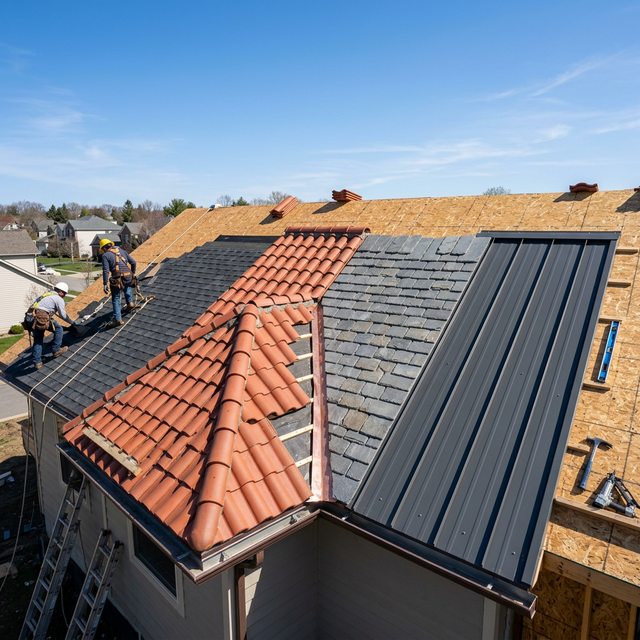
The Relationship Between Pitch and Materials
Not all roofing materials are created equal when it comes to roof slope compatibility. Choosing the wrong material for your pitch can lead to leaks, premature failure, and voided warranties.
Flat and Low-Slope Roofs (0:12 to 2:12)
These roofs require materials that create a continuous, waterproof membrane:
- TPO (Thermoplastic Polyolefin): Energy-efficient, reflective white membrane
- EPDM (Ethylene Propylene Diene Monomer): Durable rubber roofing
- Built-Up Roofing (BUR): Multiple layers of asphalt and felt
- Modified Bitumen: Roll roofing with enhanced flexibility
Low to Moderate Slope (3:12 to 4:12)
At this pitch, you have more options but still need careful material selection:
- Architectural Asphalt Shingles: Most manufacturers require minimum 4:12
- Metal Panels: Standing seam metal roofing works well from 3:12
- Synthetic Slate: Lighter weight alternative with good drainage
Conventional Slope (5:12 to 9:12)
This range offers the widest variety of material choices:
- Three-Tab Shingles: Most affordable option
- Wood Shakes/Shingles: Natural aesthetic, requires minimum 4:12
- Clay or Concrete Tiles: Classic look, excellent durability
- Natural Slate: Premium option with exceptional longevity
Steep Slope (10:12 and Above)
While these roofs drain beautifully, installation is more challenging:
- Metal Roofing: Excellent choice for steep pitches
- Slate Tiles: Traditional and highly durable
- Cedar Shingles: Beautiful natural appearance
Cost Considerations
Remember that steeper roofs require more materials (due to increased surface area) and typically cost more to install due to safety requirements and specialized equipment needs.
Use our calculator to determine your roof’s pitch before making material decisions.