What Is Roof Pitch?
Roof pitch refers to the steepness or angle of a roof. It’s typically expressed as a ratio — for example, 4:12 means the roof rises 4 inches for every 12 inches of horizontal run. Understanding your roof’s pitch is crucial for several reasons, from choosing the right materials to estimating project costs.
Why Does Roof Pitch Matter?
Material Selection
Different roofing materials are designed for specific pitch ranges. Asphalt shingles work best on roofs with a pitch of 4:12 or steeper, while flat or low-slope roofs typically require membrane roofing systems like TPO or EPDM.
Water Drainage
Steeper roofs shed water and snow more effectively. In regions with heavy rainfall or snowfall, a steeper pitch helps prevent water pooling and ice dam formation.
Structural Considerations
The pitch affects the roof’s wind resistance, weight distribution, and overall structural requirements. Steeper roofs generally require more materials but offer better weather protection.
How to Measure Roof Pitch
From Inside the Attic
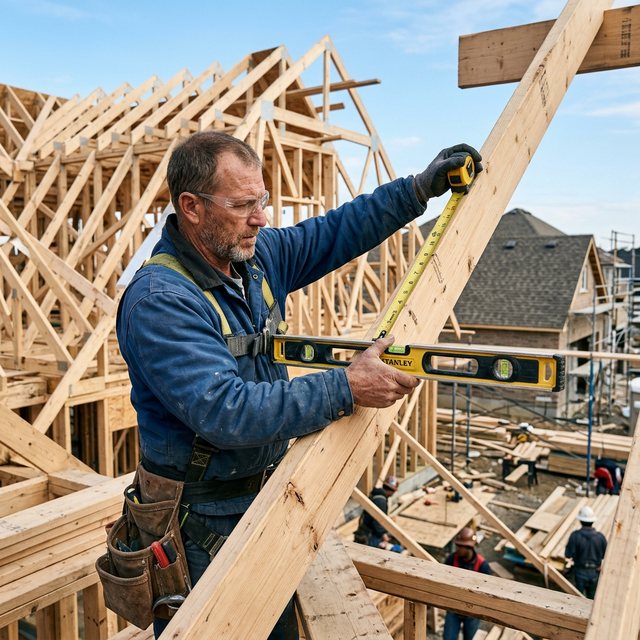
- Place a level horizontally against a rafter
- Measure 12 inches along the level from the rafter
- Measure the vertical distance from the end of the level down to the rafter
- This gives you the rise per 12 inches of run
From Outside
- From a safe position, place a level against the roof surface
- Mark 12 inches along the level
- Measure vertically from the mark to the roof surface
- This measurement is your rise
Common Roof Pitch Categories
- Flat/Low Slope (0:12 to 2:12): Requires special waterproofing membranes
- Low Slope (3:12 to 4:12): Minimum for standard asphalt shingles
- Conventional (5:12 to 9:12): Most common for residential construction
- Steep Slope (10:12+): Excellent drainage but more expensive to install
Using Our Calculator
Our Roof Slope Calculator makes it easy to convert between different pitch formats. Simply enter your rise and run measurements, and the calculator instantly provides the pitch ratio, angle in degrees, and percentage grade.